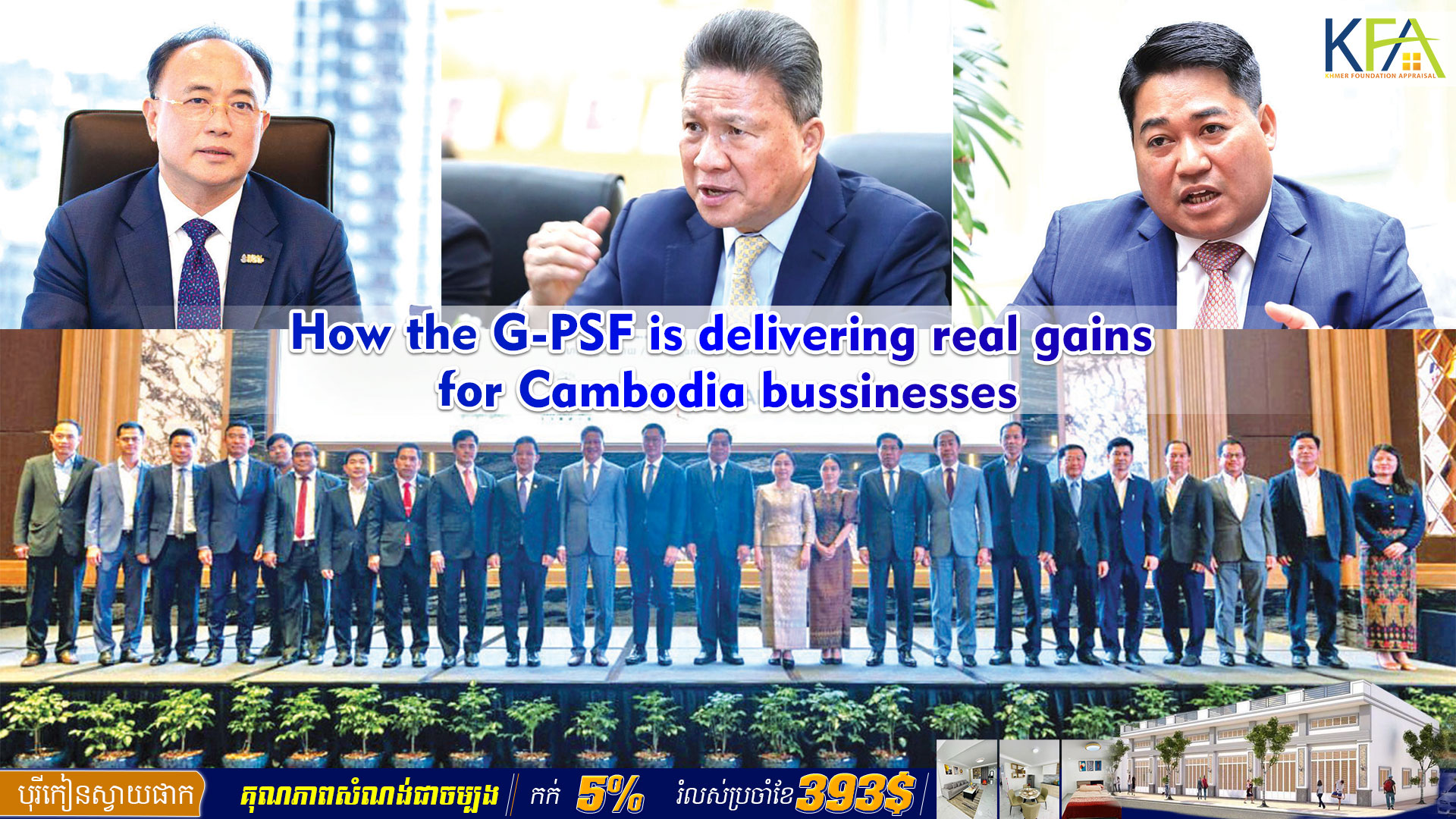
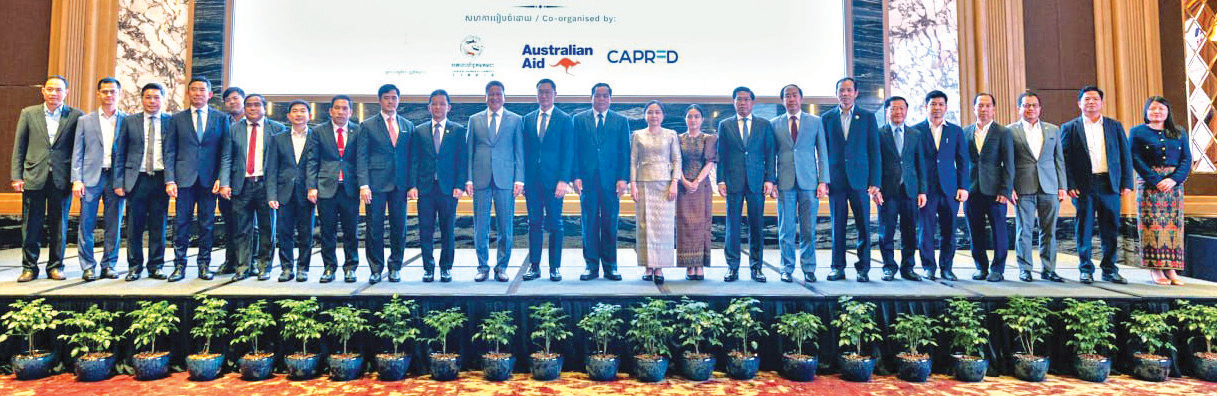
 Cambodia’s Government-Private Sector Forum (G-PSF) has helped to build and sustain vital exchanges between senior government leaders and private enterprise in Cambodia for 25 years. CAPRED
For over two-and-half decades, the role of the private sector has been the Royal Government’s top national priority, and rightly so, it viewed the private sector as a strategic partner and a primary driver of economic growth. Also, the government wants the private sector to take ownership and responsibility in contributing to Cambodia’s economic growth. The Government-Private Sector Forum (G-PSF), an offshoot of such a vision, has seminally contributed to institutionalise a robust dialogue between government and businesses. One of the primary roles of the G-PSF is to raise the companies’ operational challenges directly with senior policymakers, reducing reliance on fragmented administrative channels — the impact has been far-reaching on businesses. Measures aimed at easing compliance with tax and customs requirements have reduced administrative burdens, improved predictability, and lowered transaction costs. Trade facilitation initiatives, including procedural improvements and greater use of digital platforms, have streamlined import and export processes, addressing long-standing concerns among exporters and manufacturers. In short, it has set a benchmark, ensuring that future generations benefit from a stronger business environment that attracts more investors to Cambodia
Cambodia’s Government-Private Sector Forum (G-PSF) is increasingly demonstrating its value as a practical mechanism for translating business concerns into concrete policy action, with the majority of reform measures agreed at the 19th Forum now fully implemented and most private sector issues raised through formal dialogue already resolved, according to a recently released government progress report.
The Progress Report on the Implementation of Resolute Reform Measures Introduced at the 19th Government-Private Sector Forum – First Semester of 2025, approved by the Council of Ministers, positions the G-PSF as a central platform through which private sector feedback is systematically integrated into regulatory reform and administrative decision-making. Prepared by the Council for the Development of Cambodia (CDC) with support from the Australian Government through the Cambodia-Australia Partnership for Resilient Economic Development (CAPRED), the report reinforces the Royal Government’s view of the private sector as a strategic partner and a primary driver of economic growth.
Established to institutionalise dialogue between government and business, the G-PSF enables companies to raise operational challenges directly with senior policymakers, reducing reliance on fragmented administrative channels. This approach was reinforced at the 19th G-PSF, held on November 13, 2023, which endorsed 11 major packages of resolute reform measures covering taxation, customs, trade facilitation, finance, tourism, agriculture, infrastructure, mining, energy and the digital economy.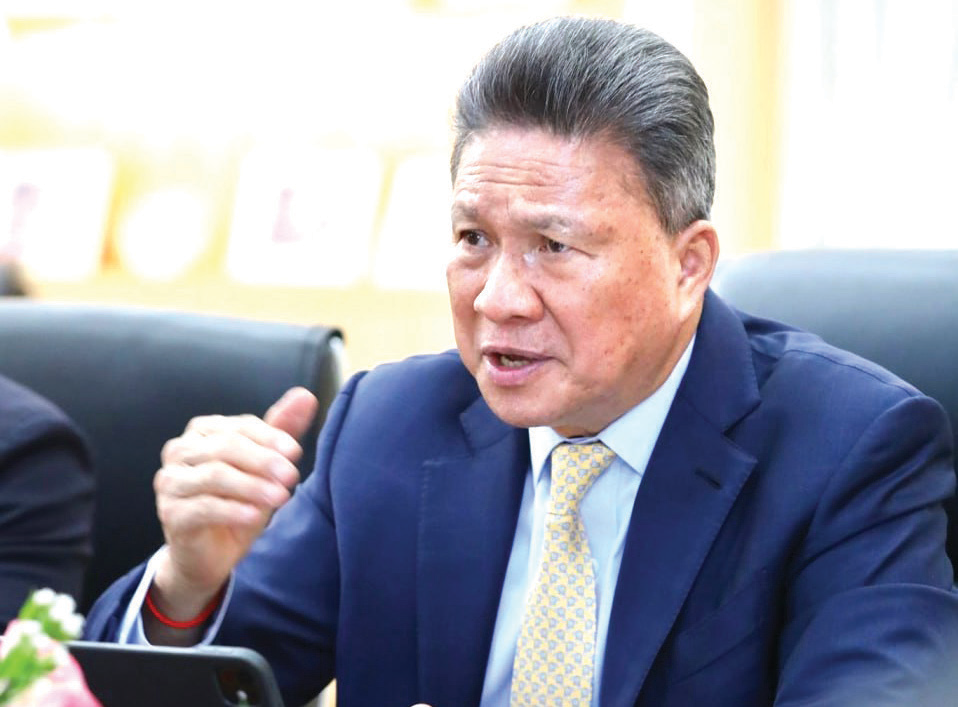 Sun Chanthol, Deputy Prime Minister and First Vice-Chairman of the Council for the Development of Cambodia (CDC). CDC
To ensure accountability, these reform packages were translated into 179 specific and measurable actions. As of the first semester of 2025, 166 measures — approximately 93 percent — had been fully implemented, with the remaining 13 under active implementation. This marks further progress compared with 2024, when 89 percent of measures had been completed, indicating sustained momentum in responding to private sector priorities.
For businesses, the impact of these reforms has been tangible. Measures aimed at easing compliance with tax and customs requirements have reduced administrative burdens, improved predictability and lowered transaction costs. Trade facilitation initiatives, including procedural improvements and greater use of digital platforms, have streamlined import and export processes, addressing long-standing concerns among exporters and manufacturers.
In the financial sector, completed reforms have enhanced regulatory clarity and strengthened coordination among authorities, while measures in mining and energy have addressed licensing, competition and pricing issues that previously created uncertainty for investors. The construction and real estate sector has also benefited from clearer ownership mechanisms and support for loan restructuring, helping to stabilise activity during a challenging market period.
Tourism and agriculture, two labour-intensive sectors critical to inclusive growth, have featured prominently in the G-PSF reform agenda. Under the “Visit Siem Reap 2024” programme, measures introduced through the Forum have addressed visa facilitation, destination management, workforce training, sanitation, security and promotion, directly reflecting concerns raised by tourism operators. In agriculture, reforms have focused on contract farming, agro-processing, tariff structures and infrastructure support, responding to issues consistently highlighted by agribusinesses and farmer groups.
The report also highlights the importance of the G-PSF’s institutional architecture, particularly its 16 sectoral working groups, each co-chaired by representatives from government and the private sector. These working groups serve as the primary problem-solving mechanism, allowing many issues to be resolved at a technical level before escalation to the Forum’s plenary session.
Since the 19th G-PSF, businesses have raised 196 issues through these working groups during 2024 and the first half of 2025. Of these, 160 issues — approximately 82 percent — have already been resolved. The remaining issues are under consideration by relevant ministries, with the stated aim of delivering outcomes that support business operations and competitiveness.
Resolution rates have been particularly strong in several sectors. In 2024, 115 issues were raised, and by mid-2025, 99 — about 86 percent — had been resolved. During the first semester of 2025, a further 81 issues were raised, with 61, or roughly 75 percent, resolved within the same period. Several sectoral working groups, including agriculture and agro-industry, transportation and infrastructure, export processing and trade facilitation, industrial relations, rice production, and construction and real estate, resolved all issues raised, underscoring the effectiveness of structured dialogue.
Private sector perceptions further support the Forum’s impact. A survey conducted in July 2025 during a dissemination event for the previous progress report found that around 78 percent of respondents expressed strong satisfaction with the introduction of the reform measures agreed at the 19th G-PSF, while 51 percent reported strong satisfaction with their implementation.
Crucially, the reforms appear to be influencing business decisions. About 43 percent of respondents said the measures encouraged them to consider expanding operations, while 34 percent indicated interest in investing in other sectors. Nearly a quarter said the reforms could lead them to hire additional staff, highlighting the G-PSF’s potential contribution to job creation. Noun Rithy, Chairman of the Board of KFA Group. Supplied
The report concludes that the G-PSF has evolved into a key instrument for aligning policy with business realities. As Cambodia pursues its ambition of becoming a high-income country by 2050, the Forum’s continued effectiveness will depend on sustained engagement, transparency and a shared commitment to practical, growth-oriented reform.
Empowering private sector
The Royal Government of Cambodia (RGC) has reaffirmed that strengthening the role and rights of the private sector remains a top national priority, as part of its long-term vision to achieve high-income country status by 2050.
Sun Chanthol, Deputy Prime Minister and First Vice-Chairman of the Council for the Development of Cambodia (CDC), reiterated the government’s position while speaking at a dissemination workshop on the First Semester 2025 Progress Report on the Implementation of Resolute Reform Measures introduced at the 19th Government–Private Sector Forum (G-PSF). The event, held in Phnom Penh, also marked the 25th anniversary of the G-PSF mechanism.
Chanthol, who also serves as Chairman of the G-PSF Coordinating Committee, said the core objective of the reforms is to encourage the private sector to think proactively, act responsibly and play a leading role in national economic development.
“The government wants the private sector to take ownership and responsibility in contributing to Cambodia’s economic growth, in line with our shared vision of becoming a high-income country by 2050,” he said.
Describing the CDC as the government’s investment arm, Chanthol noted that the institution has been working actively to improve and strengthen the investment climate. Key efforts include promoting and disseminating the Law on Investment, attracting foreign investors, and streamlining and integrating procedures, particularly through the digitalisation of public services.
He added that these reforms are designed to make Cambodia more competitive and investor-friendly, while reducing unnecessary administrative and legal burdens on businesses.
“The private sector has shown strong commitment to building on its achievements, ensuring that future generations benefit from a stronger business environment that attracts more investors to Cambodia,” Chanthol said.
During his remarks, Chanthol called on Kith Meng, President of the Cambodia Chamber of Commerce and the broader business community, to make a clear commitment to full compliance with national laws and regulations.
“I would like to ask Neak Oknha Kith Meng to discuss with members of the Chamber of Commerce to make a promise to the Prime Minister that the private sector will lead companies in full accordance with Cambodian laws,” he said. “The government does not want to manage businesses. We want to facilitate. But if the private sector commits and makes this promise, it would be truly encouraging.”
Chanthol stressed that the government’s consistent approach has been to simplify procedures and reduce regulatory burdens, allowing businesses to operate more efficiently and focus on growth and innovation.
“The role of the government is not to control the private sector, but to facilitate it so that businesses can perform their roles effectively,” he added.
He said that continued trust, dialogue and shared responsibility between the public and private sectors will be essential in sustaining Cambodia’s economic momentum and achieving its long-term development goals.
Pillar of public–private dialogue
G-PSF has marked its 25th anniversary, highlighting its role as Cambodia’s highest platform for dialogue between the Royal Government and the business community, according to Kith Meng, President of the Cambodia Chamber of Commerce (CCC).
Speaking at the anniversary event in late November, Kith Meng, Chair of the Committee Coordinating of the Private Sector Working Groups for the G-PSF, said the G-PSF has become the “centrepiece of advocacy” for the Chamber of Commerce and a key mechanism in shaping the country’s business and investment climate over the past quarter-century.
“The success of the G-PSF is that it is the highest platform for public and private sector dialogue in Cambodia,” he said, noting that its continued operation reflects strong commitment from both sides.
Over the past 25 years, more than 4,000 private sector concerns have been raised and addressed through the forum, contributing to wide-ranging reforms in customs, taxation, trade facilitation, logistics, digitalisation, SME development and investment policy.
“These achievements show that when the Royal Government and the private sector work together, Cambodia wins,” Kith Meng said.
He extended his appreciation to Sun Chanthol, Deputy Prime Minister and First Vice-Chair of the Council for the Development of Cambodia (CDC), who chairs the committee coordinating the G-PSF on the government side. Kith Meng also praised the CDC for its role as the government’s secretariat for the forum, responsible for coordinating, monitoring and evaluating the implementation of agreed reforms.
According to Kith Meng, the CDC works closely with government co-chairs in each ministry and with private sector working groups to ensure that decisions made through the G-PSF translate into practical outcomes.
Beyond addressing policy bottlenecks, the G-PSF has helped foster a culture of open and constructive dialogue, allowing the private sector to share its knowledge and capacity with government institutions in a proactive and respectful manner.
“This approach has opened a wider window for consultation between the Royal Government and the private sector, even beyond the G-PSF,” he said.
He noted that new innovations, including the G-PSF Dashboard and Database, are expected to strengthen transparency and improve monitoring by capturing dialogue activities within a single framework.
Looking ahead, Kith Meng said stakeholders must focus on preparing the G-PSF for the next 25 years by engaging younger generations of Cambodian entrepreneurs.
“The G-PSF invites all Cambodian business people to participate,” he said, adding that its sustainability depends on the continued commitment and experience of the private sector.
He also acknowledged support from the Australian government, through the Cambodia-Australia Partnership for Resilient Economic Development (CAPRED), for supporting the event and the development of new Standard Operating Procedures and a Management Information System.
Kith Meng concluded that the G-PSF has not only improved Cambodia’s business environment but has also strengthened trust between government and investors, institutions and enterprises, and between Cambodia and the global business community.
G-PSF serves as vital bridge
G-PSF has played a crucial role in aligning public policy with business realities, helping to improve Cambodia’s investment climate through sustained dialogue and reform, according to a leading private sector representative.
Noun Rithy, Chairman of the Board of KFA Group, told Khmer Times that the G-PSF has delivered tangible benefits for both the public and private sectors by ensuring close coordination between policymakers and implementers.
“The government is the regulator and the public sector is the implementer, while the private sector is the direct implementer,” he said. “Therefore, the implementation and policies of the government must go hand in hand with the realities faced by businesses.”
Rithy highlighted the role of the 16 private sector working groups under the G-PSF framework, which act as formal channels for businesses to raise concerns, provide technical input and propose reforms. Through these mechanisms, the private sector has been able to contribute ideas that have informed government decisions, including reforms and amendments to the Investment Law to ensure alignment with modern business practices in the digital era.
He also praised the leadership of Neak Oknha Kith Meng, President of the Cambodia Chamber of Commerce, for actively steering private sector engagement through the forum. According to Rithy, the private sector has consistently shown a strong commitment by participating in discussions, identifying challenges and submitting structured proposals to the government via the working groups.
“Neak Oknha Kith Meng always brings strategies and constructive suggestions to address difficulties faced by businesses,” he said. “The government, in turn, has shown willingness to respond, particularly in improving the investment environment for both domestic and international investors.”
Customs and taxation have recently been among the key areas of focus, Rithy noted. The private sector has provided extensive input to simplify documentation procedures and address long-standing concerns among taxpayers. Regular meetings between businesses and customs and tax authorities have helped build mutual understanding and encourage compliance with government mechanisms.
“These discussions help both sides understand each other better, so businesses can comply more effectively, while institutions can improve their services,” he said.
Rithy described the G-PSF as a valuable platform that functions both as a mirror and a roadmap for the government. By reflecting the challenges faced by businesses and offering practical solutions, the forum has supported ongoing reforms aimed at strengthening Cambodia’s competitiveness.
“We have seen many reforms and many solutions,” he said. “The 16 working groups consistently prioritise problems and work to resolve them. The Government–Private Sector Forum is a beautiful mechanism — a true voice of the private sector to the government.”
He added that continued cooperation through the G-PSF would remain essential as Cambodia seeks to attract higher-quality investment and adapt its regulatory framework to a rapidly evolving regional and global economy.
#Source #https://www.khmertimeskh.com/501812616/how-the-g-psf-is-delivering-real-gains-for-cambodian-businesses/